Small Acts, Deep Roots: The Quiet Power of Showing Up Again and Again
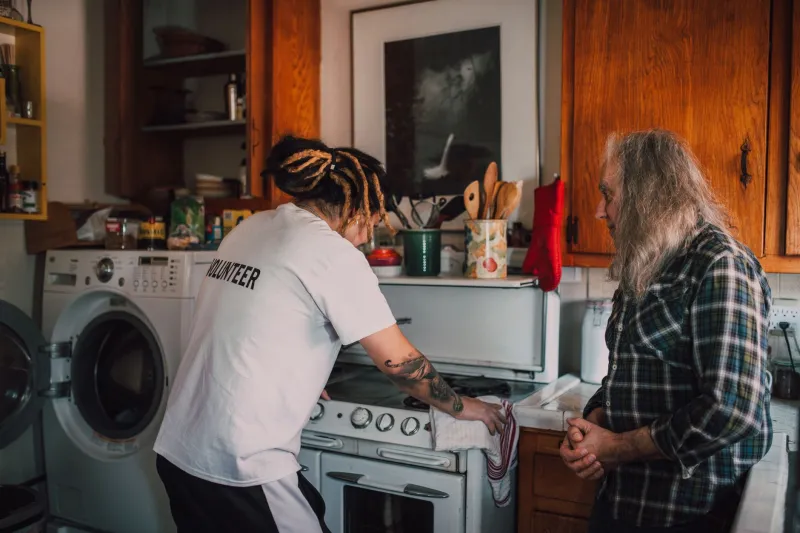
There is a particular kind of courage that receives almost no applause. It does not arrive in a flash of inspiration or a tearful altar call. It does not trend on social media or generate the kind of story that gets shared at denominational gatherings. It looks, instead, like a woman in her mid-sixties driving across Madison every Tuesday morning to sit with a homebound neighbor who has not left her apartment in three weeks. It looks like a man who attends the stewardship committee meeting even though he finds parliamentary procedure quietly agonizing. It looks like a teenager who keeps returning to youth group even when the discussions feel awkward and the music is not quite to her taste.
This is the scandal of ordinary faithfulness — and it may be the most countercultural thing a Christian can practice in contemporary America.
The Glamour Problem
We live in a moment that is deeply in love with transformation as spectacle. Spiritual memoirs climb bestseller lists when they promise radical reinvention. Retreat centers fill their weekends with language about breakthrough and awakening. Even well-meaning congregations can inadvertently communicate that genuine faith is measured by the intensity of one's experience rather than the durability of one's commitment.
This is not entirely without merit. Moments of genuine spiritual awakening are real, and they deserve to be honored. The problem arises when dramatic experience becomes the primary currency of Christian witness — when the person who has not had a mountaintop moment in several years begins to wonder, quietly and alone, whether their faith has stalled or gone cold.
The Methodist tradition, at its best, has always pushed back against this tendency. John Wesley was not uninterested in the transforming work of grace; he was, in fact, consumed by it. But his genius lay in recognizing that transformation is not primarily an event. It is a practice. It is built, brick by ordinary brick, through the means of grace — through worship, through study, through acts of mercy, through Christian conferencing — repeated with disciplined regularity across a lifetime.
What Committees Have to Do with Salvation
This may sound abstract until you consider what actually happens when people commit to showing up consistently in the life of a congregation.
Consider the committee meeting. It is tempting to dismiss such gatherings as administrative tedium, the least spiritual corner of church life. And yet something remarkable occurs when the same group of people sits together month after month to discern how a community of faith should spend its resources, plan its ministry, and steward its shared life. Disagreements surface. Personalities chafe against one another. Someone proposes an idea that another person finds impractical, and the conversation gets genuinely uncomfortable.
This is not a failure of community. This is community. This is the slow, unglamorous work of learning to see another person not as an obstacle to your preferred outcome but as a fellow bearer of the image of God, whose perspective might — if you can tolerate the friction — expand your own.
At Asbury UMC Madison, we have seen this pattern play out in ways that are difficult to quantify but impossible to miss. The people who have been most deeply formed by this congregation are rarely those who attended a single transformative event. They are the ones who kept returning — to worship, to service, to fellowship, to the sometimes tedious and always sacred work of building something together over time.
Visiting the Shut-In as Theological Act
There is an ancient tradition within Methodism of visitation — of literally going to where people are, particularly those who cannot come to you. Wesley himself walked thousands of miles to bring the gospel to people the established church had largely forgotten. His early followers understood that the movement of the body toward another human being was itself a form of proclamation.
When a member of Asbury UMC visits a homebound neighbor, brings a meal to a family navigating illness, or simply sits in the presence of someone who is lonely, they are not performing a charitable errand. They are enacting the theology they profess. They are making the love of God visible and tangible in a specific kitchen, on a specific afternoon, for a specific person who needed to know they had not been forgotten.
This is not dramatic. It will not appear in a highlight reel. But it is, by almost any serious theological measure, among the most significant things a Christian can do with a Tuesday afternoon.
The Neighborhood as Parish
The same logic extends beyond the walls of the congregation and into the neighborhoods of Madison itself. Showing up in your neighborhood — attending the block association meeting, learning the names of the people who live three doors down, patronizing locally owned businesses, advocating for the school down the street even if your own children are grown — is a form of faithfulness that Methodist tradition would recognize immediately.
The early Methodist class meetings were not held in grand buildings. They were held in homes, in fields, in the places where ordinary life was already happening. The assumption was that the sacred and the everyday were not two separate realms but one continuous territory in which God was already at work and into which God's people were called to show up with intention and consistency.
The Formation That Only Repetition Can Provide
Psychologists who study habit formation have long known what Wesley intuited theologically: that character is not primarily the product of insight but of practice. You do not become a generous person by having a single profound realization about generosity. You become a generous person by giving, repeatedly, until the act reshapes something in you at a level deeper than conscious intention.
The same is true of patience, of compassion, of the capacity to sit with someone else's grief without rushing to fix it, of the ability to disagree without contempt. These are not traits that arrive fully formed after a weekend retreat. They are cultivated — slowly, imperfectly, and almost always in the company of other people who are also in the middle of becoming.
At Asbury UMC Madison, we believe that this is precisely what a congregation is for. Not to provide a weekly emotional experience, though worship can and should move us. Not to offer a community of the like-minded, though genuine friendship is one of the great gifts of church life. But to provide the sustained, structured, accountable context in which ordinary people can become, over time, more fully the people God created them to be.
An Invitation to the Unglamorous
If you are reading this and feeling the particular fatigue of someone who has been quietly faithful for a long time without much recognition, we want to say something directly to you: what you are doing matters. The committee meetings you have attended, the visits you have made, the Sunday mornings you showed up when you did not particularly feel like it — these are not the consolation prize for people who never had a dramatic spiritual experience. They are the substance of a life genuinely shaped by grace.
And if you are newer to this community and wondering what faithful participation actually looks like, the answer is both simpler and more demanding than you might expect. It looks like returning. It looks like staying. It looks like choosing, again and again, to be present to the people and the place and the practice that God has set before you.
The roots that sustain a life of faith are not grown in a single season of intensity. They go down slowly, through ordinary soil, in ordinary time. And they hold.