Ebb and Flow: Making Peace with the Uneven Terrain of a Living Faith
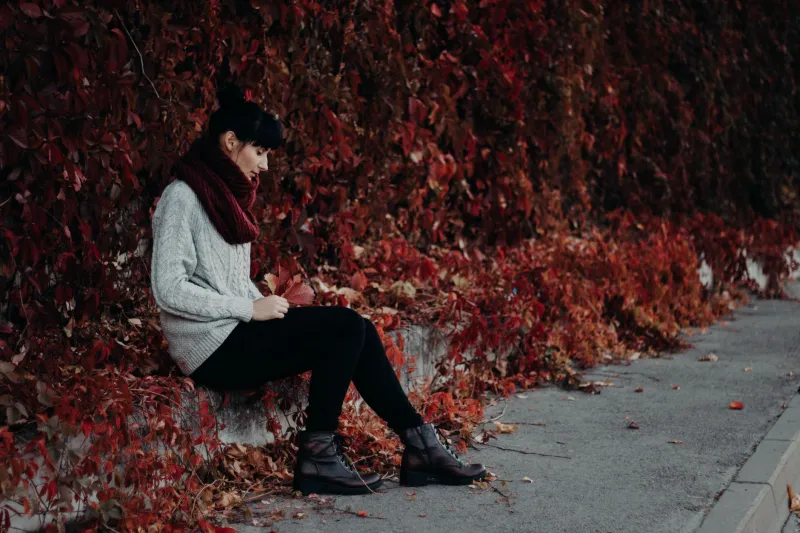
Somewhere along the way, many of us absorbed a picture of mature Christian faith that looks something like this: steady, warm, consistently nourished, never seriously shaken. The person who prays every morning without effort, who reads Scripture with unfailing attentiveness, who leaves every worship service genuinely moved. The person for whom faith feels, most of the time, like a reliable and pleasant presence.
For most of us, that picture does not match our actual experience. And I want to suggest that the mismatch itself is worth examining—because I think the picture is wrong, not the experience.
The Myth of the Flat Line
We live in a culture that is deeply uncomfortable with fluctuation. We want our health metrics trending upward, our productivity consistent, our moods manageable. The language of optimization has crept into every domain of life, and it has crept into faith as well. We speak of "growing spiritually" in ways that imply a steady, measurable ascent—as if the life of faith were a fitness regimen with reliable results.
But that is not how living things work. Seasons change. Tides move in and out. Gardens go fallow before they bloom again. The natural world operates in cycles precisely because cycles are generative—the apparent emptiness of winter is not a failure of the ecosystem but a necessary condition for spring.
The mystics of the Christian tradition understood this intuitively. They wrote about what Saint John of the Cross famously called "the dark night of the soul"—a season of spiritual aridity and apparent divine absence that was not, in his view, a sign of abandonment but a sign of deepening. The very experience that feels like regression is often, in retrospect, the most formative passage of all.
Naming the Seasons Honestly
There is genuine pastoral value in simply naming the different seasons that most believers move through, without layering judgment onto any of them.
The season of vibrancy is the one we most readily recognize and celebrate—when prayer feels natural, Scripture comes alive, community feels nourishing, and the sense of God's presence is accessible and warm. These seasons are gifts, and they deserve to be received with gratitude. They are not, however, permanent states, and treating them as the baseline against which all other seasons are measured will cause unnecessary suffering.
The season of dryness is perhaps the most common and least discussed. Prayer becomes effortful. Worship feels routine. The words that once carried electricity now land flat. Many believers interpret this season as evidence that something has gone wrong with them—that they have failed spiritually, or that God has withdrawn. In most cases, neither interpretation is accurate. Dryness is frequently the experience of being asked to love God beyond the feelings that once made loving God easy. It is, in its way, a maturing invitation.
The season of questioning arrives for almost every serious believer at some point, and often more than once. Something happens—a loss, an encounter with suffering, an intellectual challenge, a shift in life circumstances—that destabilizes previously comfortable convictions. This season is deeply uncomfortable and, in communities that treat certainty as the mark of faith, can feel profoundly isolating. But questioning is not the opposite of faith. It is often faith's most honest form.
The season of renewal does not always arrive on schedule or in the form we expected. Sometimes it comes quietly, through a conversation or a piece of music or a long walk. Sometimes it comes dramatically, through an experience that reorients everything. Sometimes we only recognize it in retrospect, looking back and realizing that something has shifted—that we are somehow more ourselves, more open, more rooted than we were before.
Why We Fight the Rhythms
If seasonal fluctuation is so normal, why do so many believers resist it so strenuously? Why do we work so hard to manufacture the feelings of vibrancy when they are absent, or to suppress the questions that arise in seasons of doubt?
Part of the answer is communal. In many congregations—including, if we are honest, our own at times—there is an unspoken social pressure to perform spiritual health. Sunday morning is a context where people present their best selves, and that pressure can make it feel dangerous to admit that you have not prayed meaningfully in weeks, or that you are not sure you believe what you used to believe, or that you sat through the sermon feeling nothing at all.
At Asbury UMC Madison, we want to actively dismantle that pressure—not by lowering our expectations of one another, but by raising our honesty with one another. A community where people can say "I am in a dry season" or "I am full of questions right now" without fear of concern or correction is a community where genuine spiritual formation can actually happen.
Wisdom for Each Season
Rather than prescribing a single spiritual practice as universally applicable, it may be more helpful to think about what each season actually asks of us.
In seasons of vibrancy, the invitation is to receive generously and give generously—to let the abundance of this season overflow into service, into relationship, into the lives of people around you who may be in a different season entirely.
In seasons of dryness, the invitation is often simply to remain. To continue showing up—to worship, to prayer, to community—not because it feels meaningful but because faithfulness is sometimes a practice rather than an experience. The act of staying, even when staying is hard, forms something in us that ease never could.
In seasons of questioning, the invitation is to follow the questions honestly. Bring them to trusted conversation partners. Bring them to Scripture and to the broader Christian tradition. Bring them to God directly, in whatever form that prayer takes for you. Questions pursued with integrity tend to lead somewhere worth going.
In seasons of renewal, the invitation is to pay attention. Renewal is often subtle, and we miss it by looking for the dramatic version. Notice the small signs. Mark them. Let them be evidence, held in memory, for the next season when the ground feels less stable.
A Community for Every Season
One of the genuine gifts of belonging to a congregation over many years is that you encounter people in every season simultaneously. When you are dry, someone near you is flourishing. When you are questioning, someone else has just arrived at a place of hard-won clarity. When you are renewing, someone beside you is just entering the dark.
This is not accidental. The community of faith is, among other things, a place where we carry one another's seasons—where the abundance of some becomes provision for others, and where no one has to navigate their particular terrain entirely alone.
At Asbury UMC Madison, we believe that all of your seasons belong here. Not just the ones that look like faith at its best. All of them.