Sacred Questions: Why Asbury UMC Believes Doubt Belongs in the Pew
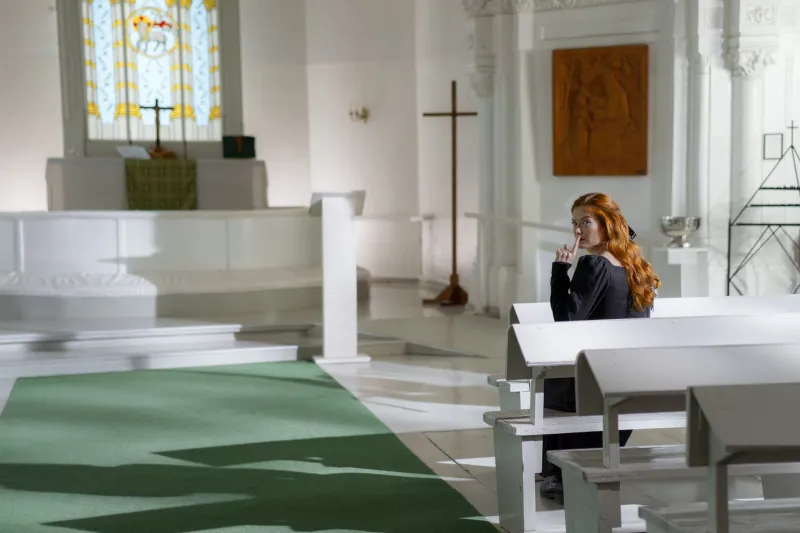
There is a particular kind of silence that settles over a congregation when someone finally asks the question everyone else has been carrying. It is not an uncomfortable silence, exactly. It is the silence of recognition—the collective exhale of people who have been holding their breath, relieved that someone else said it first.
At Asbury United Methodist Church in Madison, we have heard that silence more than once. And we have come to believe it is one of the holiest sounds in the room.
Doubt, in many Christian communities, has long been treated as a spiritual liability—something to be managed, minimized, or quietly resolved before it spreads. But a growing number of theologians, pastors, and ordinary believers are pushing back against that framing. They are arguing, with considerable biblical support, that doubt is not the opposite of faith. It is often the very road that leads there.
The Biblical Tradition of Honest Questioning
Scripture is far more comfortable with uncertainty than many of our church cultures have been. Consider Thomas, who refused to accept the resurrection without direct evidence and whom Jesus met not with rebuke but with an open invitation to touch his wounds. Consider the psalmists, whose laments fill entire chapters with raw, unanswered cries directed squarely at God. Consider Job, who argued with the Almighty across dozens of chapters and was ultimately commended for speaking what was true, while his more theologically tidy friends were not.
Even the great figures of the faith—Abraham, Moses, Elijah, Mary—each encountered moments of profound disorientation, fear, or confusion in their relationship with God. The biblical narrative does not sanitize these moments. It lingers in them, because they are precisely where transformation tends to happen.
Jesus himself, in the agony of Gethsemane and from the cross, voiced a cry of abandonment drawn from Psalm 22. If the Son of God could cry out "My God, my God, why have you forsaken me?" then surely there is room in the Christian tradition for our own unanswered questions.
What It Costs to Pretend We Have No Doubts
For many people sitting in pews across America on any given Sunday, the performance of certainty has become exhausting. They mouth the words of the creed while privately wondering whether they believe them. They nod along to a sermon while internally wrestling with a theological claim that troubles them deeply. They smile and say "blessed" when someone asks how their faith is holding up, even when the honest answer is something far more complicated.
This kind of spiritual performance has real costs. It isolates people at precisely the moments when they most need community. It creates a false impression that everyone else has figured out what you have not, which compounds shame and loneliness. And it prevents the kind of genuine theological conversation that has historically been the lifeblood of a healthy, growing church.
When people cannot bring their real questions to their faith community, they do not stop having the questions. They simply stop bringing them to church—and often, eventually, they stop coming to church at all.
How Asbury UMC Is Cultivating Space for Honest Dialogue
At Asbury UMC Madison, we are actively working to build a congregation where doubt is not a sign of weak faith but an invitation to go deeper together. This commitment shows up in several concrete ways.
Open Table Conversations: Several times each year, we host facilitated small-group gatherings specifically designed for theological exploration. These are not Sunday school classes with predetermined answers. They are structured conversations where questions are welcomed, disagreement is respected, and no one is expected to arrive with certainty. Participants frequently describe these gatherings as among the most spiritually meaningful experiences they have had in a church setting.
Sermons That Sit with Complexity: Our pastoral team is committed to preaching that does not paper over the hard passages of Scripture or the difficult realities of contemporary life. We believe that a sermon which acknowledges genuine tension is far more trustworthy—and ultimately more faith-building—than one that offers easy resolution to problems that do not have easy resolutions.
A Culture of Pastoral Availability: Our pastoral staff actively encourages one-on-one conversations with members who are navigating periods of doubt or theological uncertainty. These conversations are held in confidence and without an agenda of talking anyone back into a particular position. Sometimes the most important thing a pastor can do is simply witness someone's struggle without rushing to fix it.
Recommended Resources: Our church library and website offer curated reading lists that include not only devotional classics but also works by theologians who engage honestly with doubt, deconstruction, and the complexity of modern faith. Authors like Barbara Brown Taylor, Rachel Held Evans, and Brian McLaren have found their way into our community's reading life because they write with the kind of honesty that resonates with people who are tired of easy answers.
The Difference Between Doubt and Cynicism
It is worth drawing a distinction that sometimes gets lost in these conversations. Welcoming doubt into the life of a congregation is not the same as embracing cynicism or abandoning theological conviction altogether. Doubt, at its healthiest, is animated by a genuine desire to understand—to hold beliefs that are true, meaningful, and worthy of one's whole life. It is the restlessness of someone who takes faith seriously enough to interrogate it.
Cynicism, by contrast, has given up on the search. It has decided in advance that no answer will be satisfying, and it tends to corrode community rather than build it.
At Asbury UMC, we are not interested in cultivating cynicism. We are interested in cultivating honesty—and we believe honesty, over time, tends to lead people toward deeper faith rather than away from it. The doubter who stays in the room, who keeps asking questions, who continues to show up even when the answers are elusive, is often the person who eventually arrives at a faith that is genuinely their own rather than simply inherited or performed.
An Invitation to Bring Your Whole Self
If you are reading this from a place of spiritual uncertainty—if you have questions you have been afraid to voice, convictions that have been shaken by loss or science or simply the weight of lived experience—we want you to know that Asbury UMC Madison is a place where you are welcome to bring all of that.
You do not need to resolve your doubts before you walk through our doors. You do not need to perform a faith you do not fully feel. You need only show up, as honestly as you can, and trust that the community gathered here will meet you with grace rather than judgment.
Faith, after all, has never been about the absence of questions. It has always been about the willingness to keep walking—toward God, toward one another, toward the light that sometimes only becomes visible in the darkness of not knowing.
We are walking that road together here in Madison. We would be honored to walk it with you.