Surrendering the Map: How God's Grace Guides Us Through Life's Hardest Crossroads
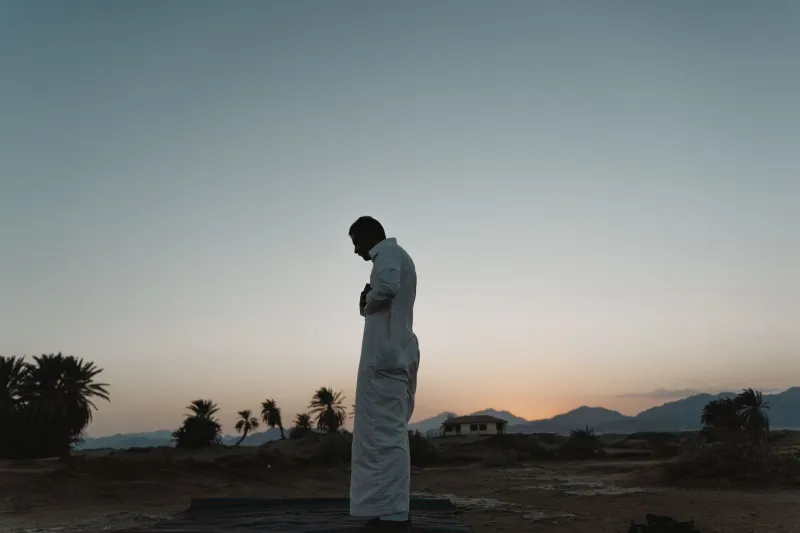
There is a particular kind of silence that settles over a person standing at a crossroads — the quiet that comes not from peace, but from the weight of consequence. Should I take this job? Should our family relocate? Is this relationship the one God intends for me? These questions do not arrive with easy answers, and no amount of spreadsheet analysis or sleepless deliberation seems to resolve them. What many believers in our Madison community have discovered, however, is that the path forward is rarely found through greater effort. More often, it is found through surrender.
At Asbury United Methodist Church, we believe that grace is not merely a theological concept reserved for Sunday mornings. It is a living, active force that meets us precisely when our own wisdom runs dry. The art of saying "yes" to God — even before the full picture is revealed — is one of the most transformative spiritual disciplines a person can practice.
What Does It Actually Mean to Surrender a Decision?
Surrender is a word that carries unfortunate baggage in American culture, where self-reliance is often treated as a virtue second only to success. Yet the Christian tradition has long understood surrender not as weakness, but as the highest form of trust. In Proverbs 3:5-6, we are counseled to "trust in the Lord with all your heart and lean not on your own understanding." This is not an invitation to passivity. It is an invitation to partnership.
Surrendering a decision to God means bringing your full self — your fears, your ambitions, your confusion — into honest conversation with the Divine. It means holding your preferred outcome loosely enough that you can genuinely receive an answer that differs from what you expected. It means cultivating the interior stillness necessary to hear something beyond the noise of anxiety.
This kind of surrender is, admittedly, an art form. It is practiced imperfectly and learned gradually. But its fruits are unmistakable.
Stories from the Madison Community
Consider the experience of one longtime Asbury member, a woman in her late forties who faced a devastating professional crossroads two years ago. Her department was being restructured, and she was offered a position that would require significant travel — something her family situation made enormously complicated. Every practical consideration pointed in one direction. Her heart pointed in another.
"I spent weeks making lists," she recalled during a recent Wednesday evening small group discussion. "Pro columns, con columns. I prayed, but honestly I was mostly just talking at God rather than listening. It wasn't until I finally said, 'I genuinely don't know, and I'm going to trust You with this,' that something shifted. Within two weeks, a third option appeared that I hadn't even known existed."
Her story is not unique within our congregation. A young couple who had been struggling with the decision to adopt described a similar turning point — a moment when their fervent prayers for clarity transformed into a simpler, quieter prayer of availability. "We stopped asking God to confirm what we already wanted," the husband shared, "and started asking Him to make us willing to receive whatever answer He had." Their adoption was finalized last spring.
These narratives share a common thread: the breakthrough did not come through more information or more effort. It came through a fundamental reorientation of the will.
Theological Roots of Grace-Led Decision-Making
United Methodist theology has always held grace in a central and expansive place. John Wesley, the founder of the Methodist movement, described what he called "prevenient grace" — the idea that God's grace is already at work in a person's life before they are even aware of it, drawing them gently toward wholeness and truth. This means that when we face a difficult decision, we are not navigating alone. Grace has already gone ahead of us.
This theological foundation transforms the way we approach discernment. Rather than treating prayer as a mechanism for extracting divine approval for our plans, we begin to understand it as a means of aligning ourselves with a purpose already in motion. The question shifts from "God, please bless my decision" to "God, help me perceive what You are already doing."
The Wesleyan tradition also emphasizes the role of community in spiritual discernment. Wesley himself organized early Methodists into small accountability groups — class meetings — where members would examine their spiritual lives together. This communal dimension of decision-making is not incidental. It reflects the conviction that the Holy Spirit speaks not only in solitary prayer but through the wisdom, challenge, and encouragement of fellow believers.
Practical Exercises for Grace-Centered Discernment
For those who wish to cultivate this kind of grace-led approach to decision-making, the following practices have proven meaningful for many in our congregation:
Examen Prayer: Borrowed from the Ignatian tradition and embraced across many Protestant communities, the Daily Examen invites you to review the events of your day with God — noticing where you felt most alive and most depleted. Over time, this practice sharpens your awareness of how the Spirit moves in your particular life.
Journaled Dialogue: Rather than simply writing about a decision, try writing a conversation — your words, then a space of silence, then whatever words or images arise. Many find this loosens the grip of analytical thinking and opens a different kind of knowing.
Community Discernment: Bring your question to a trusted circle of fellow believers. Not for advice-giving, but for prayerful listening. Ask them to reflect back what they hear in your words — the fears beneath the logic, the longings beneath the options.
Threshold Sitting: Identify the moment of your decision as a threshold and resist crossing it prematurely. Sit with the uncertainty longer than is comfortable. Often, the answer that emerges from patient waiting carries a quality of peace that forced conclusions never do.
The Peace That Surpasses Understanding
Philippians 4:7 speaks of "the peace of God, which surpasses all understanding." This is not the peace of having all the answers. It is the peace of knowing that the One who holds all answers also holds you. For many in our Madison community, the most transformative spiritual moment of their lives was not the moment the decision became clear, but the moment they became genuinely willing to trust God regardless of the outcome.
That willingness — that profound, courageous, quietly revolutionary "yes" — is itself a form of faith. And it is, we believe, precisely where grace meets us.
If you are standing at a crossroads today, we invite you to join us at Asbury UMC. Our pastoral team is available for individual spiritual direction appointments, and our small group ministry provides ongoing community for those navigating life's most significant seasons. You do not have to find the way alone.